
 Admin
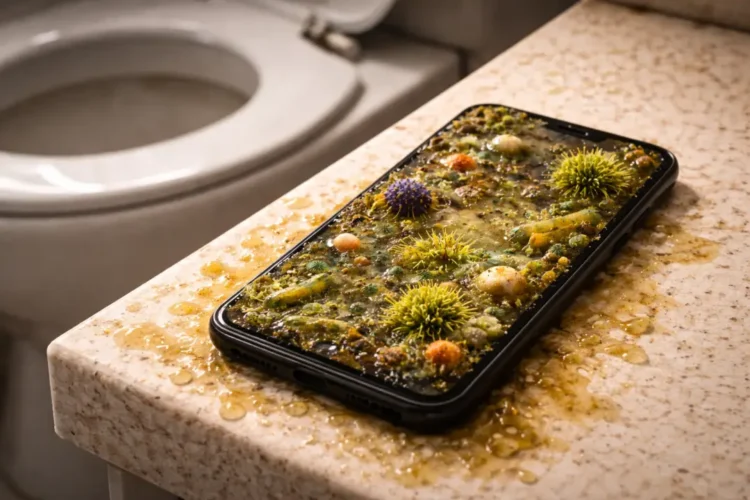
AdminScientists have been telling us for a decade that your phone screen has more bacteria than an average toilet seat, and honestly? It’s not just some gross urban legend meant to scare you. It’s a reality of modern living that we all completely ignore.
You will be shocked as soon as you know the fact that “your phone screen has more bacteria than a toilet seat.” Keep reading…
The invisible ecosystem in your pocket.
Think about where your phone goes during the day. It’s on the dinner table, it’s in your gym bag, and for many people, it’s sitting right there on the counter while they use the bathroom. We treat these devices like extensions of our hands, but we never wash them.
I’ve spent over ten years reviewing hardware, and I’ve seen some crusty tech in my time—but the sheer microbial density on a standard glass display is staggering. It’s not just dust; it’s a living, breathing colony of E. coli, staph, and whatever else you picked up on that subway handrail this morning.
Also check this: Did you know? Actually the internet weighs about as much as a single strawberry. Your phone screen has more bacteria than a toilet seat, which is something many people search for, and understanding it properly can save you time and effort.
The problem is the warmth. Smartphones are basically miniature incubators. When you’re pushing your processor to the limit with a game or a high-res video call, that heat helps bacteria thrive.
Combine that with the natural oils from your fingertips, which act as a nutrient-rich buffet for microbes, and you’ve got the perfect environment for a biological party that you definitely weren’t invited to. It’s not just about being “clean”; it’s about acknowledging that our devices are biological magnets.
How we actually make the problem worse
I used to be the guy who would grab a spray bottle of glass cleaner and douse my screen.
Please, do not do this. I learned the hard way that household chemicals are a quick ticket to ruining your oleophobic coating—that smooth, fingerprint-resistant finish that makes the phone feel premium.
When you strip that coating away, the surface becomes slightly more porous and uneven on a microscopic level. Suddenly, bacteria find it much easier to lodge themselves into those tiny pits and scratches, making your phone even harder to sanitize than before.
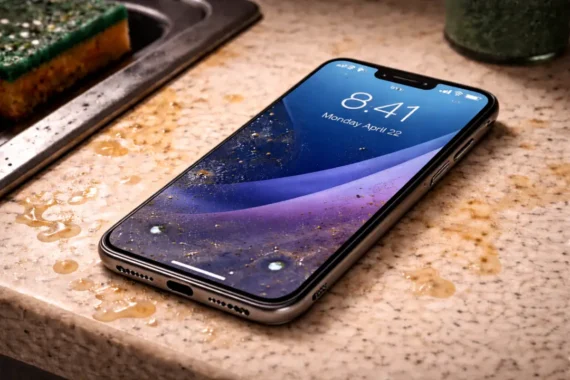
Then there’s the case situation. We spend forty dollars on a fancy silicone case for protection, but rarely take it off. I recently popped the case off my daily driver after six months, and I felt like an archaeologist uncovering a tomb.
The amount of grit, dead skin cells, and mysterious lint buildup was nauseating.
If you aren’t cleaning both the phone and the case, you’re just trapping a whole new ecosystem against the back of your device. It’s a classic case of “out of sight, out of mind,” but the germs don’t care if you can’t see them.
Common Mistakes in the Cleaning Process
We all try to stay hygienic, but most of us are doing it fundamentally wrong. One of the biggest mistakes I see tech enthusiasts make is using abrasive materials. Using a paper towel or a rough napkin might seem harmless, but over time, those wood fibers create thousands of micro-scratches.
These scratches are basically luxury condos for bacteria. Once they get in there, no amount of light wiping is going to get them out. Always stick to high-quality microfiber cloths; they’re designed to lift particles rather than drag them across the glass.
Another major slip-up is the over-reliance on hand sanitizer. Some people think, “Well, my hands are clean, so my phone is clean.” That’s not how it works. If you wipe your phone with a half-dried, sticky hand sanitizer wipe, you’re just creating a glue-like film that actually attracts more dust and bacteria over the next few hours.
You need to use a dedicated 70% isopropyl alcohol solution, and even then, don’t spray it directly onto the device. Spray the cloth, then wipe the device.
It’s a simple distinction that saves your internal components from potential liquid damage.
My routine for keeping things in check
I stopped being obsessive about it, but I did adopt a consistent weekly routine. Every Sunday night, while I’m watching a show, I take my phone out of its case. I use a soft-bristled toothbrush—one I keep only for tech—to scrub the charging port and the speaker grilles gently.
You’d be shocked at the amount of lint that gets packed in there. That lint is usually damp and full of bacteria.
Removing it isn’t just about hygiene; it actually helps your charging cable sit better and improves audio clarity.
For the screen itself, I use a specialized display cleaner and a clean microfiber cloth. It takes all of two minutes. Doing this regularly keeps the glass smooth and keeps the bacterial count from hitting those “toilet seat” levels.
It’s not about living in a sterile bubble—because that’s impossible—it’s just about lowering the baseline. If you reduce the load on your screen, you’re less likely to transfer that gunk to your eyes or mouth throughout the day.
FAQs
Is it really worse than a toilet seat?
Studies have shown this to be true, primarily because toilet seats are cleaned more often with harsh disinfectants. Your phone, on the other hand, is warm, rarely cleaned, and constantly handled. It’s the perfect storm for bacteria to multiply, whereas a toilet seat is actually a relatively hostile environment for germs in comparison to the cozy warmth of a flagship smartphone.
Can UV-C phone sanitizers actually work?
They do work, but there’s a catch. They can only kill what the light touches. If your phone is covered in a thick layer of finger oils and debris, the UV light might not be able to penetrate the gunk to reach the bacteria underneath. You should still wipe your phone down before putting it in a UV-C box to get the best possible results.
Will alcohol wipes damage my screen?
Generally, using 70% isopropyl alcohol wipes is safe for modern smartphones, as confirmed by both Apple and Samsung. The danger comes from using bleach, hydrogen peroxide, or window cleaners, which can permanently strip the protective oleophobic coating. Stick to the 70% concentration, and you’ll be just fine.
How often should I really clean it?
If you’re a heavy user or you work in an environment like a hospital or a restaurant, you should probably do a quick wipe-down daily. For the average person, a thorough cleaning twice a week is usually enough to keep the microbial population under control. Just don’t let it go for months at a time, or you’ll definitely be carrying around more than you bargained for.
What about the case? Does that matter?
The case is actually the biggest offender. It holds onto moisture and skin cells that slip between the case and the phone body. Most people never clean the inside of their case. Make sure to take your case off at least once a week and wash it with soap and warm water if it’s made of silicone or plastic—just make sure it’s completely dry before you snap it back on.
Related Topics
phone hygiene, cleaning smartphone screens, microbes on phones, sanitizing mobile devices, isopropyl alcohol for phones
Related Articles
- Google Maps hack to use it offline and save massive data
- Top 5 signs it is finally time to replace your old laptop
- Did you know? Most 4K videos on YouTube are not actually true 4K quality.
- Top 5 best Chrome extensions for productivity
- Did you know? Actually the internet weighs about as much as a single strawberry
- Top 5 best cloud storage services for 100% privacy
- How To Unlock Windows Laptop Using Your Phone (The Easy Way)
- Did You Know? Dark Mode Only Saves Battery On Specific Screen Types
- airplane mode fast charging hack – Charge Your Phone 2x Faster: The Airplane Mode Secret
- leaving phone plugged in overnight – Chill Out: Your Phone’s Fine Charging Overnight
For more details, check the official guide: Microsoft Support.